Trading

The Dow (US30), a plan written before the open, and the discipline to follow it. This is the funded journey — documented honestly.

The story so far

I learned to trade from YouTube — two traders called Aman and Shaun at Astro FX, breaking down key levels on a white table, honest about their losses. That honesty stuck with me. It’s why I film the losses too.

On Friday, November 13, 2026, I passed the one-step $100K FTMO challenge — all objectives green, in one step. No phase two, no verification round. That put me on a funded account the following Monday.

And here’s the part most people cut out of the video: the first funded account didn’t make it. I blew it in four days. Not because the levels were wrong — because I kept trading outside the plan. I pressed buy when every timeframe said sell. I took four trades when the plan said one. I chased the money instead of protecting the account.

So this page isn’t a victory lap. It’s the plan I’m rebuilding on — and the reason I’m buying another challenge and doing it right this time.

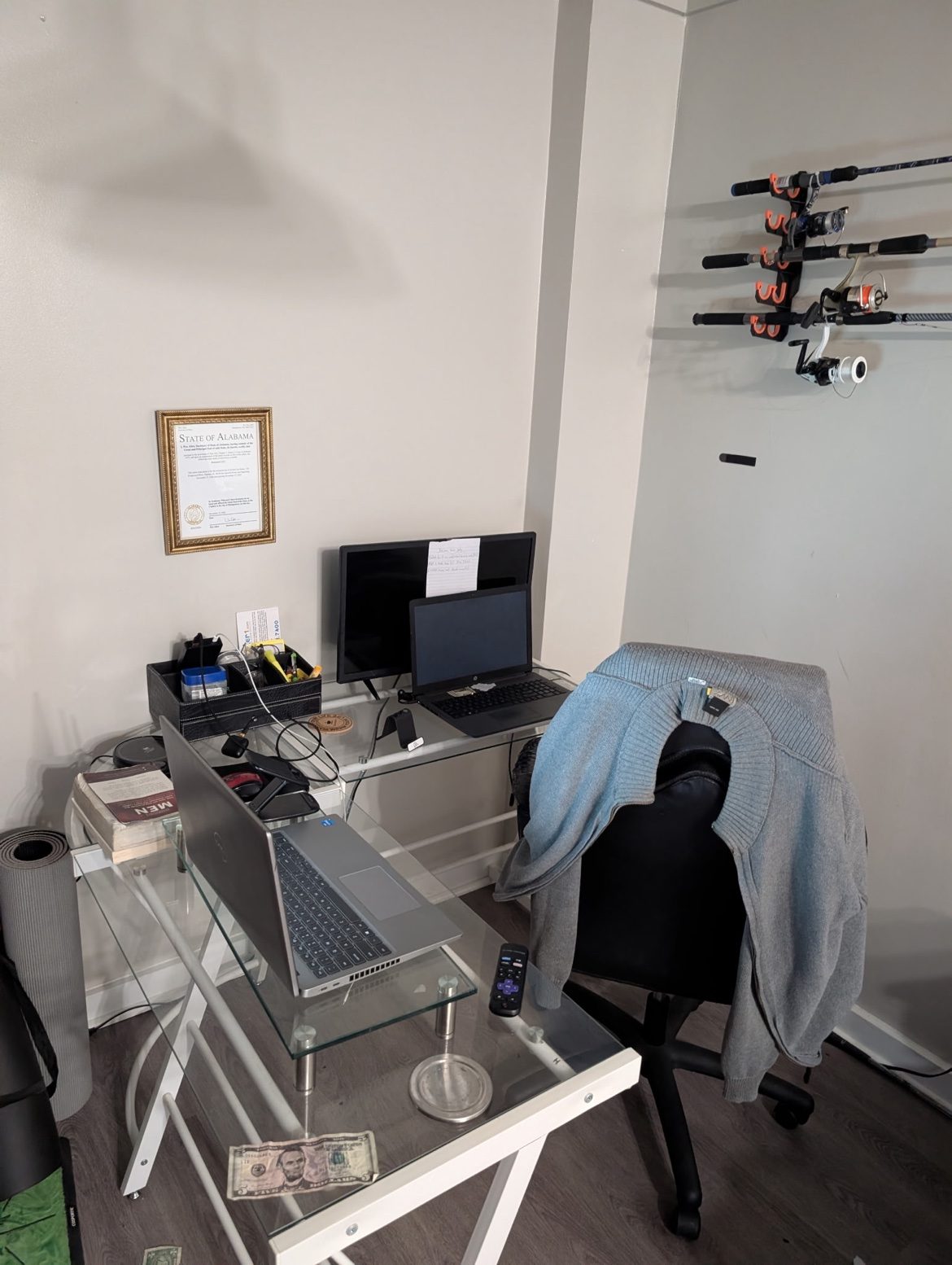
Jorrele Inman's trading desk — two laptops, a monitor, and fishing rods on the wall
My desk. Two laptops, one monitor, and the plan.
“Protect my account until it’s over $5,000. Move the stop to breakeven as soon as possible. No trade is ‘the one’ for $2,000.” — My funded game plan, in my own words

November 19, 2026

Trading

It’s not the wind. It’s the set of the sail.

It’s not about the blowing of the wind, it’s about the set of the sail. The same wind blows on us all. We all go through the same bull crap, in different ways — family, neighbors, job, taxes, family, money coming, money going, distractions. Goals, excuses.

But the set of the sail is what it’s all about. Setting goals. Staying on track. Doing what it takes to accomplish your goals. Establishing the discipline it takes. Stop doing the stuff you don’t need to do. Knowing what you don’t need to do — and not doing that.

In my case: being patient. Not being greedy. Being disciplined. That’s what’s holding me back right now.

That line is Jim Rohn’s. It lives rent-free in my head for a reason.

The plan

It fits on an index card. That’s the point.

  1. Levels first. Before the 8:30 open, I declare my support and resistance levels for the day. No level, no trade.
  2. Check the bias first, then the level. Every timeframe — 3-month, monthly, weekly, daily, 4-hour, 1-hour — gets a read: bullish or bearish. If they all agree, that’s the side I trade. If they’re mixed, I wait.
  3. Wait for confirmation. A bounce off support or resistance, or a break-and-retest — confirmed by a closed 15-minute candle. Before 9:30 is a mirage. The real window is 9:30 to 10:30.
  4. One trade a day. One preset order. Fifty-pip stop, hundred-pip target. Win, I’m done. Lose, I’m done. It never fills, I’m done. The recap is for learning — never permission for a second trade.
  5. Protect the account. Move the stop to breakeven as soon as I can. A breakeven stop means I lost nothing, and I trade tomorrow.

What I’ve learned the hard way

  • FOMO is the root cause. Every bad trade I’ve taken started the same way: I felt like I was missing out, so I pressed a button.
  • The payout is the test, not the pass. Passing a challenge feels great. Getting paid out is a different skill — patience, fourteen days straight.
  • Boredom blows accounts. I used to sit in front of my computer after work with nothing to do. That’s when the bad trades happen. A life away from the charts is part of the trading plan.
  • Be yourself until the payout. When I try to become a monk before the money comes, I fail. Golf, music, family, a little TV — that’s when I trade best.

The goal

One good trade a day. One hundred pips. That’s it. Stack the boring days and the payout takes care of itself.

Read the daily vlog

I’m sharing my journey, not financial advice. Trading involves real risk of loss. What works for me may not work for you — do your own research.